What We Learned from Research in 2025
I haven’t written many posts in 2025; here are the measly few I’ve managed to squeak out:
- Literacy Is Not Just for ELA: The Power of Content-Rich Teacher Tall
- More Productive Than an Hour of Instruction?: The Surprising Cognitive Science of a Walk in the Park
- AI, Mastery, and the Barbell of Cognitive Enhancement
While my bandwidth to peruse research has diminished this year (work has been busy, and I like spending time with my children) I have still encountered a fair number of compelling studies. In keeping with the tradition begun in 2023, and building on last year’s review, I am endeavoring to round up the research that has crossed my radar over the last 12 months.
This year presents a difficult juncture for research. Political aggression against academic institutions, the immigrants who power their PhD programs, and the federal contracts essential to their survival has disrupted research. Despite this, strong research continues to be published. Because research is a slow-moving endeavor, I suspect the full effects of these disruptions will manifest increasingly in future roundups; for now, the good work persists.
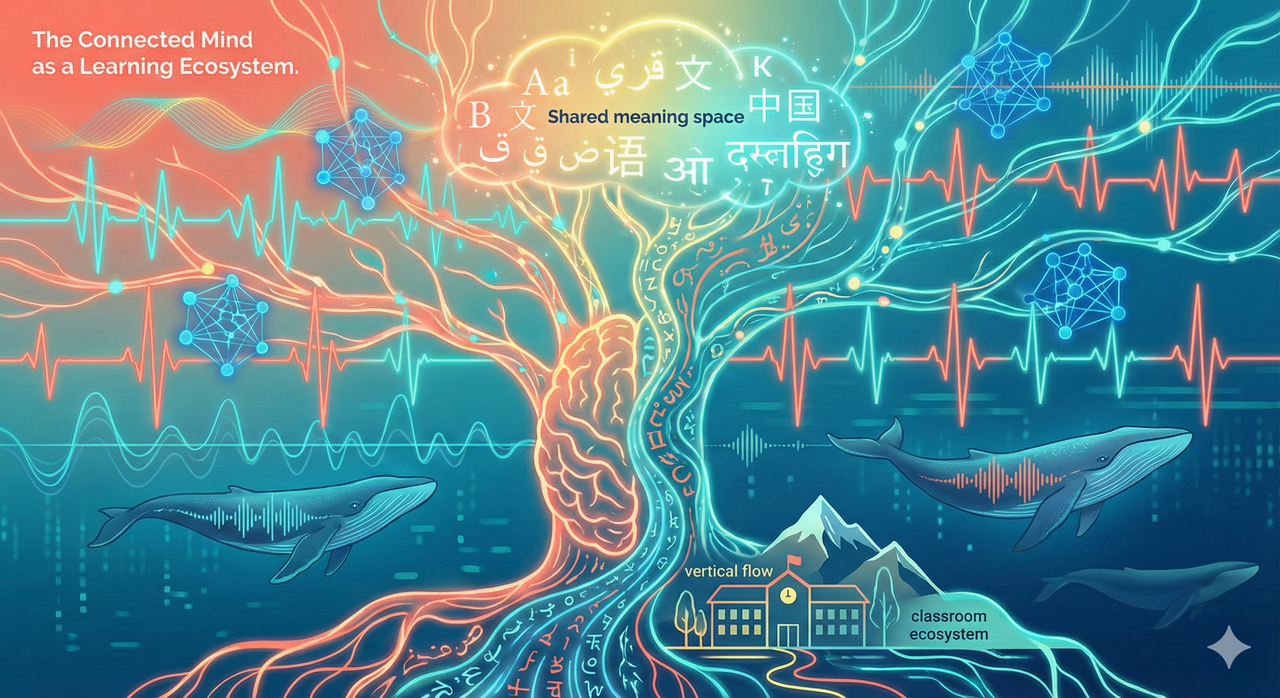
The research landscape of 2025 highlights a continued shift toward experience-dependent plasticity. This view treats the human mind as a dynamic ecosystem shaped by biological rhythms, cultural “software,” and technological catalysts. Learning is no longer seen as a linear accumulation of skills, but as a sophisticated orchestration of “statistical” internal models and external social and cultural and technological attunements.
Longtime readers will recognize this “ecosystem” view from my other blog on Schools as Ecosystems. It is validating to see the field increasingly adopting this ecological lens—viewing the learner not as an isolated machine, but as an organism deeply embedded in a biological and cultural context.
Our “big buckets” for this year have ended up mirroring the 2024 roundup, which means, methinks, that we have settled upon a perennial organizational structure:
- The Science of Reading and Writing
- Content Knowledge as an Anchor to Literacy
- Studies on Language Development
- Multilinguals and Multilingualism
- Rhythm, Attention, and Memory
- School, Social-Emotional, and Contextual Effects
- The Frontier of Artificial Intelligence and Neural Modeling
Let’s jump in!
I. The Science of Reading and Writing
The Critical Role of Morphology and Vocabulary
Readers of my 2023 roundup will recall that morphology was a major theme that year, and it remains central in 2025. Morphology refers to the smallest units of meaning in a word, and is strongly connected to the origins and evolution of words (etymology), and to vocabulary development and reading comprehension in general. It also serves as a crucial link to spelling, given the irregularities in a language such as English that cannot be resolved via phonological decoding alone.
In any given orthography, it is indeed the combination of phonology (the sounds) and morphology that enable a finite number of phonemes or symbols to be recombined into a potentially infinite number of unique words.
- “Combinatoriality enables an orthography to provide learnability and decipherability for the novice reader (via phonological transparency) as well as unitizability and automatizability for the expert (via morphemic transparency).” (Blueprint for a Universal Theory of Learning to Read: The Combinatorial Model, Reading Research Quarterly)
Early writing is a “canary in the coal mine” for future reading success. A study of 243 preschoolers found that initial levels and growth in name writing and letter writing significantly predicted later word reading and passage comprehension. This association held true for both monolingual and bilingual children identified as at-risk for reading difficulties, indicating that writing development is a universal literacy milestone.
- “Children’s initial levels of name writing, letter writing, and picture writing... predicted their later reading abilities in both word reading and passage comprehension.” (Beyond Word Recognition: The Role of Efficient Sequential Processing in Word- and Text-Reading Fluency Development, Scientific Studies of Reading)
A massive analysis of 1,116 children demonstrated that word reading and spelling are effectively a single latent trait (r = 0.96). However, spoken vocabulary knowledge acts as a bridge, allowing readers to use known word meanings to compensate for “fuzzy” or imprecise knowledge of letter-sound rules.
- “Our results suggest that word reading and spelling are one and the same, almost, but that spoken vocabulary knowledge is more closely related to reading than to spelling.” (On the relationship between word reading ability and spelling ability, Reading and Writing)
The ability to form and retrieve letter sequences (orthographic mapping) is a consistent driver across both typical and dyslexic populations:
- “Among typically developing children, orthographic mapping, phonological awareness, oral vocabulary, and working memory scores uniquely explained reading comprehension. Among children with dyslexia, only orthographic mapping and oral vocabulary scores uniquely predicted reading comprehension.” (The effects of orthography, phonology, semantics, and working memory on the reading comprehension of children with and without reading dyslexia, Annals of Dyslexia)
Longitudinal data showed that from Grade 3 to Grade 5, morphological awareness (manipulating prefixes, suffixes, roots) overtakes phonological awareness as the primary driver of reading comprehension and the mastery of complex, multi-morphemic words.
- “These results indicate continuing and pervasive roles for phonological awareness, naming speed, and morphological awareness over the later elementary school years, especially for morphological awareness in reading comprehension.” (Effects of morphological awareness, naming speed, and phonological awareness on reading skills from Grade 3 to Grade 5, Journal of Experimental Child Psychology)
Explicit and Implicit Instruction
All this leads to interesting findings this year around explicit instruction (EI) vs. statistical and implicit learning. We often pit these two against each other, but 2025 gave us some direction towards a more synergistic understanding.
Explicit instruction in alphabet instruction is critically important, regardless of modality and language status.
“Young children benefit from explicit and systematic alphabet instruction, regardless of whether such instruction is multisensory or visual-auditory. . . EB and English monolingual children experienced a similar benefit from alphabet instruction, perhaps because they had similar socio-economic status and language backgrounds.” (An initial yet rigorous test of multisensory alphabet instruction for english monolingual and emergent bilingual children, Early Childhood Research Quarterly)
“It is unrealistic to teach children a minimal set of letter–sound correspondences and expect them to deduce the more complex statistics of a writing system without guidance.. . . it is clear that the findings of laboratory studies of statistical learning do not generalize straightforwardly to the real world.” (Statistical learning in spelling and reading, Trends in Cognitive Sciences)
“These findings clearly show that the learning via exposure is slow and does not guarantee successful learning of regularities in written languages, especially when there is more than one pattern in the input.” (Simultaneous learning of semantic and graphotactic regularities in spelling: An artificial orthography learning experiment, OSF Preprint)
But as word-level reading becomes increasing automatized, it moves to more “top-down, meaning-driven processes” related to language.
- “When we first learn to read, our brain heavily relies on its general problem-solving network (i.e. “multiple demand network”), but as we become skilled, it increasingly shifts to using specialized language networks.” (Contributions of the multiple demand network to emergent and skilled reading, Scientific Reports)
This shift is mirrored in the brain's “salience network,” which a large scale meta-analysis identifies as a shared foundation for both math and reading. While children rely on this network broadly for learning, adults engage it primarily for challenging, unmastered tasks, highlighting the importance of targeting attention and effort during the formative years.
- “The implication is that children and adults engage cognitive control networks for number-arithmetic tasks that are not yet automatized. . . ....the salience network might contribute to the common finding that learning difficulties in mathematics and reading are comorbid. . . . LD interventions should incorporate features that support the functions of cognitive control networks, including external factors that motivate attentional focus... and that highlight key information.” (Shared brain network acts as a foundation for both math and reading, Nature Communications)
For children with developmental language disorder (DLD), explicit instruction in meaning (“semantics”) is most important.
- “As a group, children with DLD showed significantly greater word-learning gain from explicit semantic interventions compared with explicit phonological therapy.” (Vocabulary interventions for children with developmental language disorder: a systematic review, Frontiers in Psychology)
Mechanisms of retention are equally critical; for children with DLD, vocabulary retention is specifically driven by the frequency of successful retrieval across multiple sessions, rather than just the intensity of exposure.
“the number of sessions in which a child successfully produces a word's form or meaning relates positively to their ability to remember that word after extended delays . . “ (The Number of Sessions Children With Developmental Language Disorder Retrieve Words Relates Positively to Retrieval After Extended Post-Training Delays, Language, Speech, and Hearing Services in Schools)
“word retention in children with DLD is influenced not only by the robustness of the initial learning phase but also meaningful retrieval and practice opportunities” (Vocabulary interventions for children with developmental language disorder: a systematic review, Frontiers in Psychology)
While response to treatment generally improves with intensity, there can be “diminishing returns” once a certain threshold is passed, such as 48 exposures in a book-reading context” . . . Retention is further enhanced when retrieval occurs with “other words intervening,” which has been shown to help with “word learning and... retention more than if they just completed the task without intervening words.” (IJLCD Winter Lecture 2025: What makes language interventions work – exploring the active ingredients, Royal College of Speech and Language Therapists)
In an orthography such as Chinese, gaining automatization with the “sub-lexical mappings between orthography (form), phonology (sound), and semantics (meaning)” can be an even greater challenge for students with dyslexia. An RCT found that explicit instruction was necessary for abstracting rules (form-sound mappings), but implicit exposure was also key for optimizing speed and efficiency.
- “Only the explicit-SL [Statistical Learning] group showed abstraction of form-sound mappings, while only the implicit-SL group showed optimized reading processes across phonology and semantics.” (Abstraction and Optimization in Statistical Learning: A Randomized Controlled Trial of Implicit and Explicit Reading Intervention for Students with Dyslexia, Proceedings of the Annual Meeting of the Cognitive Science Society)
In other words, while explicit instruction is critical, it must be accompanied by sufficient volume for application and practice.
- “These results demonstrate that efficient processing of complex syntactic structures depends on both good statistical learning skills and exposure to a large amount of print so that these skills have the opportunity to extract the relevant statistical relationships in the language” (Statistical learning ability influences adults’ reading of complex sentences, Canadian Journal of Experimental Psychology)
(I wrote about this need for balancing explicit instruction and statistical learning in my post, LLMs, Statistical Learning, and Explicit Teaching)
When it comes to learning the more precise and challenging statistics of orthography, even skilled adults are “satisficers,” choosing the simplest or easiest pronunciations rather than the statistically optimal ones predicted by vocabulary data.
- “Despite years of exposure, English readers produce /k/ pronunciations for the letter “c” before “e” and “i” over 10% of the time, “even though /k/ pronunciations of ⟨c⟩ virtually never occur in this context in English words.” (Statistical learning in spelling and reading, Trends in Cognitive Sciences)
As literacy learning shifts more towards that language-based side of things, the importance of “usage-based” learning becomes even more important, as with students learning a new language.
- “The bulk of language acquisition is implicit learning from usage. Most knowledge is tacit knowledge; most learning is implicit; the vast majority of our cognitive processing is unconscious. . . . Explicit instruction can be ill-timed and out of synchrony with development... it can be confusing; it can be easily forgotten; it can be ignored.” (Usage-based approaches to SLA, Theories in Second Language Acquisition: An Introduction)
After all, learning a new language (oracy, vocabulary, comprehension) is not only about reading or writing silently, but also about communication, which is social in nature. Balancing when new vocabulary is introduced and used therefore becomes a consideration.
- “Vocabulary acquisition through interactive tasks involves a dynamic interplay between language-specific neural networks and social-cognitive processes, with their relative contributions shifting as learners progress through sequential collaborative tasks. . . Pre-task vocabulary practice led to greater learning, while post-task practice resulted in higher IBS [inter-brain synchronization] in the brain region underlying language processing.” (Timing matters for interactive task-based learning: Effects of vocabulary practice on learning multiword expressions and neural synchronization, Studies in Second Language Acquisition)
Assessing Literacy
Gaining a deeper understanding of student’s literacy profiles in order to tailor and target instruction to their needs is important. In the past, teachers relied on “miscue analysis” and “running records” to gain this understanding, but such analysis is about as useful as flipping a coin. Instead, a study suggests that error analysis using the valid and reliable CBM measure of Oral Reading Fluency (ORF) can provide key information on whether errors are phonemic, orthographic, morphemic, and high frequency in nature.
- “Analyzing student errors and the features of the words wherein these errors occur allows for a more tailored understanding of the area in which students are struggling and provides guidance on how to adjust instruction accordingly. . . The DBI [data-based instruction] process is iterative, and the ongoing analysis of student assessment data to inform the intensification and individualization of an intervention is essential to this process.” (What’s in a Word? Analyzing Students’ Oral Reading Fluency to Inform Instructional Decision-Making, Intervention in School and Clinic)
Automated oral reading fluency assessments often exhibit bias against English learners due to speech-to-text inaccuracies, which can be mitigated by including prosody as a core sub-construct.
- “The inclusion of prosody improves automated ORF assessment by reducing discrepancies between ELLs and English first language students.” (Investigating construct representativeness and linguistic equity of automated oral reading fluency assessment with prosody, Language Testing)
Furthermore, it is important to draw upon multiple sources of data to fully understand any student’s unique needs.
- “The results of the Delphi study highlight the complexity involved in assessing dyslexia and the need to draw upon multiple sources of information: background information, standardised test results, and qualitative observations.” (Towards a Consensus for Dyslexia Practice: Findings of a Delphi Study on Assessment and Identification, Dyslexia)
II. Content Knowledge as an Anchor to Literacy
Just as we moved from word-level phonological decoding and orthographic mapping towards the importance of semantic and language-based learning, we must pair the learning of any school language not only to social communication, but furthermore to the conceptual and topical knowledge entrenched in academic disciplines.
And that conceptual and topical knowledge – so critical for critical thinking – is founded upon facts.
- “Critical thinking cannot develop and cannot flourish without facts. You need to start with evidence, with things that are true so that you can think about causality.” (Young Minds, Smart Strategies: How Children Decide When to Use External Memory Aids, APS Podcast)
Curriculum programs are typically designed around “thematic units to build content schemas.” Yet categorization may be a better means.
- “Categories are rule-based (e.g. something is or is not in a category) and hierarchical (e.g. superordinate categories/subcategories). In this respect, they provided an organizational framework that is different from traditional theme-based instructional approach, which is reliant on associative relationships, and situations. . . . Topics which build concepts through categorization provide children with a more facilitative way to process, store and retrieve information, while promoting inferences that extend knowledge beyond past and current experiences.” (Knowledge-Building Through Categorization: Boosting Children’s Vocabulary and Content Knowledge in a Shared Book Reading Program, Early Education and Development)
OK, not part of 2025 research but a great connection on this, back in 2023 Susan Pimentel, David Liben, and Meredith Liben similarly advocated for a shift from broad thematic units toward a shift for building knowledge through specific topics, which they argued could more effectively support the development of content schemas.
- “To accelerate literacy learning... teachers need instructional tools that create sustained opportunities for reading and discussing informational texts, examining the language encountered in those texts, and building new content knowledge.” (Scaling the 'dinosaur effect': Topic vs. theme in elementary classrooms, Knowledge Matters Campaign)
Relatedly, while general prior knowledge facilitates basic comprehension, topic-specific knowledge is the primary driver for building the situational models required for complex knowledge transfer. This effect is mediated by the learner’s initial mastery of a base text, as the ability to apply information to new contexts depends entirely on the foundational transfer skills established during that first encounter.
- “The amount and specificity of prior knowledge influenced learning from both texts. Additionally, learning from the first text mediated the impact of topic-specific knowledge on learning from the second text. . . .Topic-general knowledge showed a stronger correlation with comprehension, while topic-specific knowledge was more closely associated with transfer.” (The effects of the topic-specific and topic-general prior knowledge on learning from multiple complementary texts, Learning and Individual Differences)
III. Studies on Language Development
Talker Variability
Building off our previous section on the importance of content knowledge, one single predictor of a multilingual child’s ability to master complex science and social studies vocabulary is driven by a core set of foundational language skills. A student’s foundational language factor (vocab/syntax) explained 58% of the variance in their ability to produce definitions for science concepts.
- “Learning content vocabulary is significantly related to student language skills in Spanish and in English. . . We find that content is learned when the language is learned. As such, all teachers are, first and foremost, language teachers of the subject matter that they present. . . This finding suggests that developing student language skills early facilitates the learning of curricular vocabulary words later.” (Predicting Science and Social Studies Vocabulary Learning in Spanish–English Bilingual Children, Language, Speech, and Hearing Services in Schools)
While we often think “more speakers = better,” it turns out variability helps children with strong language skills (1.95x more likely to learn), but it can actually “thwart the discovery” of patterns for children with weaker language skills.
- “This study suggests that children with different levels of language skills and bilingual experience may learn new words differently. More variability = good for children with more bilingual experience or strong language skills, less variability = good for children with less bilingual experience or weaker language skills.” (The graded effects of bilingualism and language ability on children’s cross-situational word learning, Bilingualism: Language and Cognition)
Yet some variability remains key, including for students with developmental language disorder (DLD).
- “Highly variable linguistic input seems to facilitate grammatical morpheme learning in children with DLD . . .Increasing the variability in how an object is represented in treatment also has the potential to improve children's ability to generalize their next lexical knowledge.” (IJLCD Winter Lecture 2025: What makes language interventions work – exploring the active ingredients, Royal College of Speech and Language Therapists)
For adults learning new words in their native language there was no evidence that either talker variability or scaffolding the talker presentation assisted learning. Instead success was almost entirely predicted by the learner's phonological working memory and general language ability.
- “In particular, exposure to multiple speakers of the same variety resulted in the largest gain. Thus, to facilitate adaptation to unfamiliar L2 pronunciation, high-intelligibility speakers and/or multiple speakers of the same language background should be used”. (The impact of talker variability and individual differences on word learning in adults, Brain Research)
All that said, in the context of second language learning, talker variability remains a vital tool—provided the variability maintains high intelligibility and stays within the same dialect or language variety. This principle resonates with my own experience learning Spanish in Peru. I spent roughly equivalent amounts of time en la costa, en los Andes, y en la selva; yet, just as I felt I was gaining fluency, moving to a new region and encountering an entirely different variety of the language made it feel as though I were learning it all over again.
- “In particular, exposure to multiple speakers of the same variety resulted in the largest gain. Thus, to facilitate adaptation to unfamiliar L2 pronunciation, high-intelligibility speakers and/or multiple speakers of the same language background should be used”. (Intelligibility and input variability influence adaptation to unfamiliar L2 pronunciation in L2, Foreign Language Annals)
Further considerations for a practice structure with “variability”: when learning new L2 vocabulary, interleaving different categories produced superior outcomes compared to studying them in blocks, likely due to a spacing effect that forces the brain to constantly retrieve and contrast new information.
- “Mixing different language categories during practice (interleaving) rather than studying them in separate blocks produced superior learning outcomes . . . Our findings indicate that the interleaving advantage observed in other domains extends to dual language learning.” (The effects of interleaving and rest on L2 vocabulary learning, Second Language Research)
Quality vs Quantity
A central question in language research is whether children primarily need a high volume of speech (quantity) or speech that is linguistically and conceptually rich (quality).
A meta-analysis found that in the home, quantity and quality of speech are highly correlated (r=0.88); “parents who talk more naturally tend to use a more diverse and complex vocabulary.”
- Furthermore, “Younger children benefit less from lexical diversity... because words that children acquire early in life are so common and so concrete that they are likely to appear in informative contexts even in the speech of parents who exhibit lower lexical diversity.” (How strong is the relationship between caregiver speech and language development? A meta-analysis, Journal of Child Language)
Conversely, in school, only quality moves the needle. This meta-analysis examined teacher language practices from preschool to third grade and found a statistically significant association between teachers’ language quality—defined as interactive scaffolding and conceptual challenge—and children’s development, but no significant association with the quantity of teacher talk.
- “Enhancing teacher language practices is not only strategically vital but also cost-effective and scalable. . . . These findings emphasize the need to focus on improving the quality of teachers’ language practices in early childhood education through enhanced teacher preparation and ongoing professional development” (Does Teacher Talk Matter Too? A Meta-Analysis of Partial Correlations Between Teachers’ Language Practices and Children’s Language Development from Preschool to Third Grade, Review of Educational Research)
The finding that quality of teacher talk trumps quantity reinforces what I have previously explored in Research Highlight 2 and Literacy Is Not Just for ELA. We know that explicit use of academic vocabulary and decontextualized language is what drives growth, not just a whole bunch of words.
Yet despite the importance of quality talk in classrooms, large-scale recordings of 97 preschool classrooms revealed a dearth of linguistically challenging interactions.
Researchers found that 40% “Instructional time was primarily devoted to alphabetics, with a stark paucity of opportunities for children to acquire the language and content knowledge essential for later learning.”
In contrast, time spent on vocabulary and science instruction supported the most complex and pedagogical language, yet these activities combined received less than half the time allotted to simple letter drills.
There was a significant misalignment between beliefs and practice: while 96% of teachers felt confident in their ability to foster rich discussions, automated recordings showed they rarely used wh-questions or extended conversational turns (Preschool Teachers’ Child-Directed Talk, Early Education and Development)
From Womb to Weave: Human Language Development
In 2025, language research has deepened our understanding of the biological and evolutionary roots of communication. Language is not merely a set of learned properties and rules but a form of social, statistical, and biological attunement.
Human language, influenced by the sounds of the words of the adults around us, begins to develop while we are in the womb, and we begin to distinguish between our home languages and other languages.
- “Newborns recognize foreign languages they heard while in the womb.” (Babies’ Brains Recognize Foreign Languages They Heard before Birth, Scientific American)
Even mere exposure to the sounds of a tonal language like Mandarin creates lasting structural imprints in the brain's white matter that persist even if the language is no longer used.
- “Exposure to a tonal language like Mandarin early in life exerts lasting effects on white matter architecture in the brain... persisting even if the language is discontinued.” (Early but discontinued exposure to a language exerts lasting effects on white matter architecture in the brain, Communications Biology)
Once out in the world, infant attunement to their mother’s heartbeat during face-to-face interaction correlates with word segmentation ability.
- When mothers and infants had more synchronized heartbeats, the infants were better at identifying individual words within a stream of speech. . . . This biological synchrony correlated with maternal sensitivity to an infant's mental states, suggesting that an attuned emotional environment literally sets the rhythm for learning.” (Individual Differences in Infants' Speech Segmentation Performance, Infancy)
A nine-year longitudinal study furthermore found that index-finger pointing at age one is a specific developmental predictor of metaphor comprehension at age nine. This correlation reinforces the “embodied cognition” view—the idea that physical grounding in infancy serves as a required scaffold for abstract thought later in life.
- “Iconic gesture comprehension at age 3;0 was correlated with all language skills, performance on the ToM-scale and metaphor comprehension at age 9;0.” (Does early gesture usage contribute alongside oral language to later theory of mind performance and metaphor comprehension?, Language Acquisition)
You know how adults talk all silly as they goo goo and gah gah at babies? That baby talk seems to be an innate scaffolding technique that accelerates infant language development for all kids, including those with autism.
- “Infants were more likely to produce a speech-like vocalization following an adult utterance directed to them in parentese compared to an adult utterance directed to them in adult register. . . . Both neurotypical & autistic infants make more speech-like sounds when spoken to in parentese.” (Parentese Elicits Infant Speech-Like Vocalizations in Typically Developing and Autistic Infants, Infancy)
Such “parentese,” or “infant-directed speech,” is something that sets us apart from apes.
- “The rate that children heard infant-directed communication was 69 times as high as what Dr. Fryns observed among chimpanzees, and 399 times as high as what Dr. Wegdell observed among bonobos.” (Did Baby Talk Give Rise to Language?, NYTimes)
While macaque monkeys share similar visual-encoding machinery to us, they do not form “consensus color categories,” suggesting that language provides the needed cognitive and cultural framework to achieve shared conceptual agreement.
- “One animal showed evidence for a private color category, demonstrating that monkeys have the capacity to form color categories even if they do not form consensus color categories. . . Innate similarities between monkeys and humans are not sufficient to produce consensus color categories . . . This implies that human color categories are not 'hard-wired' by birth but depend on language and cultural coordination to achieve shared agreement.” (The origin of color categories, Psychological and Cognitive Sciences)
One interesting aspect of human gender differences is that girls develop more advanced language abilities than boys at an earlier age.
- “Girls learn language skills more rapidly than boys. Boys learn cognitive and fine motor skills more rapidly than girls.” (A Study of the Microdynamics of Early Childhood Learning, NBER Working Paper)
Across typologically diverse languages and cultures, children follow a universal pattern of transitioning from salient free negators (e.g. “No,” “Not”) to less salient bound negator morphemes (e.g. “-nt”).
- “In the acquisition of negation, universal mechanisms based on frequency and salience may be at work; however, individual trajectories are strongly shaped by culture and language-specific factors” (Negation in First Language Acquisition: Universal or Language-Specific?, Cognitive Science)
Furthermore, a phonemic analysis of animal onomatopoeia across 21 languages reveals that humans perceive animal sounds in ways that are similar across cultures. While cultural filters vary the spelling, the underlying sound interpretation transcends linguistic differences.
- “Phonemically the sounds made by the animals across the world are cognate in cat-speak, duck-speak, pig-speak, and so forth”. (Phonemic analysis of animal sounds as spelled in various popular languages, Language Log)
Phonemes can be viewed as “cognitive tools” that support and extend human thinking and ability. These basic sound units are predicated on physical and biological constraints but vary across cultural lineages to facilitate the efficient transmission of information.
- “Phonemes—the basic sound units of language—function as cognitive tools that shape and extend human thinking.” (The Phoneme as a Cognitive Tool, Topics in Cognitive Science)
For adults, familiar prosody is also a primary gateway to learning a new language.
“Adults can quickly pick up on the melodic and rhythmic patterns of a completely novel language” (How to learn a language like a baby, The Conversation)
Familiar pitch patterns (like those from a listener’s native language) significantly boost the ability to parse word boundaries and complex dependencies; without these melodic cues, complex structures remain unlearnable within short timeframes. (Prosody enhances learning of statistical dependencies from continuous speech streams in adults, Cognition)
And speaking of adults and parents: having more books in the house and parents who are knowledgeable about children’s stories independently helps a child's reading skills, even after accounting for the parents' own natural reading abilities.
- “Children’s reading in Grade 3 was predicted by mothers’ engagement in reading activities and by literacy resources at home, even after controlling for the genetic proxy of parental reading abilities. . . .The mothers of children who struggle tend to engage in more reading activities. . . Fathers' reported frequency of reading activities was not predictive.” (The intergenerational impact of mothers and fathers on children's word reading development, Journal of Child Psychology and Psychiatry)
Human and Animal Evolution
In 2025, the century-long view of Darwinian gradualism—the idea that species develop through slow, imperceptible increments—was further challenged by a new mathematical framework. This research reveals that living systems often evolve in sudden, explosive surges rather than a steady marathon of change. These “phantom bursts” of evolution suggest that spiky growth patterns are a general characteristic of any branching system of inherited modifications, whether in proteins, languages, or complex organisms. (The Sudden Surges That Forge Evolutionary Trees, Quanta Magazine)
What I find especially interesting about this idea of “spiky bursts” of growth is that in last year’s research roundup, we reviewed a study of 292 children which found that those who heard speech in intense, concentrated bursts had significantly larger vocabularies than those exposed to a more consistent, steady stream of language.
I also have a 2025 book recommendation, if you are interested in the history of language evolution: Proto: How One Ancient Language Went Global by Laure Spinney. There’s an interesting passage in it that I'm summarizing here:
In the Caucasus, dubbed 'the mountain of tongues' by a tenth-century Arab geographer, linguists describe a phenomenon called vertical bilingualism, where people in higher villages know the languages of those living lower down, but the reverse is not true. Why would people living in higher-altitude communities be more fluent in the languages of those residing at lower elevations? Perhaps because mountain dwellers had to travel down to lower villages for trade and resources, therefore they learned the languages of those below. Whereas, people in lower villages had less reason to travel to harder to reach and thus, more isolated higher-altitude communities. So they were less likely to learn those languages. This created the vertical flow of linguistic knowledge, mirroring the flow of physical movement.
IV. Multilinguals and Multilingualism
Just as our biological evolution has shaped our capacity for language, our environment continues to shape how those languages manifest. In 2025, the research landscape for multilingualism shifted toward an “experience-dependent plasticity” framework, viewing multiple languages not as competing systems, but as a dynamic, integrated repertoire.
Longitudinal data tracking Spanish-English bilinguals between ages 4 and 12 revealed that language dominance is fluid, not fixed. Researchers observed a rapid switch in dominance characterized by a steady decline in Spanish-only interactions as children aged. Crucially, this developmental shift is not merely a process of “loss” but one of complexity transfer.
- “The narrative complexity of a child’s Spanish (L1) stories significantly predicted the complexity of their English (L2) narratives one year later. . . . Bilinguals who produce nativelike L2 vowels are also able to maintain native L1 productions, suggesting that an increased L2 proficiency does not inevitably entail a decline in L1 proficiency.” (Factor structure and longitudinal changes in bilinguals’ oral narratives production, Applied Psycholinguistics)
This finding is complemented by validation of the Simple View of Reading (SVR) in Spanish Heritage learners, where linguistic comprehension (morphosyntax and vocabulary) was the primary predictor of reading success, echoing the need for strong L1 foundations.
- “Across both types of orthographies, decoding and linguistic comprehension together explain approximately 60% of the variance in RC. Variations between the so-named phonologically transparent and opaque orthographies highlight differences in the contributions of decoding and comprehension to RC and how these factors evolve during children's literacy development. The simplified nature of SVR thus provides a principled foundation for exploring these important questions.” (Can the Simple View of Reading Inform the Study of Reading Comprehension in Young Spanish Heritage Language Learners?, Reading Research Quarterly)
Furthermore, the structural relationship between languages matters. New research indicates that high structural and lexical overlap between a child's languages—a concept known as small linguistic distance—reduces the amount of exposure required to reach heritage language proficiency.
- “We found that language similarity affected the amount of exposure needed to reach a certain level of proficiency.” (The role of linguistic context and language similarity in the relationship between language exposure and language proficiency in bilingual children, Linguistic Approaches to Bilingualism)
I have explored this concept of “linguistic distance” in relation to diglossia and African American English, noting the greater challenged introduced when written forms diverge significantly from a student's spoken vernacular. This new research affirms that finding: just as greater distance requires more exposure, smaller distance facilitates quicker proficiency.
We often hear about the “bilingual advantage” in executive function, but 2025 research added necessary nuance regarding code-switching. The link between cross-speaker code-switching and cognitive control is heavily moderated by overall language ability. High frequency of switching was associated with better inhibitory control only for children with strong language skills; for those with weaker skills, switching often reflected lapses in production rather than strategic control.
- “Higher frequency of cross-speaker code-switches was associated with better inhibitory control only for children with higher levels of language ability . . . For children with weaker omnibus language skills, cross-speaker switches may reflect difficulties generating a message (in either language) and/or difficulties tracking language use. . . The same switching behavior may be rooted in different mechanisms in children with different levels of language ability.” (The influence of cross-speaker code-switching and language ability on inhibitory control in bilingual children, Bilingualism: Language and Cognition)
Perhaps the most striking finding this year comes from the other end of the lifespan. New evidence from 27 European countries has redefined multilingualism as a biological asset that actively slows the aging process. In a study of over 86,000 participants, monolingualism was associated with more than double the risk of accelerated biological aging compared to multilingual peers.
- “Monolingualism was associated with more than double the risk of accelerated biological aging (OR = 2.11). . . . Speaking two or more additional languages provided progressively stronger protection as individuals grew older.” (Multilingualism protects against accelerated aging in cross-sectional and longitudinal analyses of 27 European countries, Nature Aging)
V. Rhythm, Attention, and Memory
We are moving away from viewing music and speech as isolated auditory signals and toward a model of social and biological “attunement.” The latest studies suggest that rhythmic synchrony is a fundamental gateway for human connection and cognitive growth.
This attunement extends to the very mechanics of how the brain processes sound. Humans instantaneously distinguish talking from singing based on “amplitude modulation,” or the rate at which volume changes. While speech modulations reflect human vocal comfort at 4–5 hertz, music is slower and more regular at 1–2 hertz, potentially evolving specifically to facilitate group synchrony and bonding.
- “Audio clips with slower amplitude-modulation rates and more regular rhythms were more likely to be judged as music, and the opposite pattern applied for speech. . . . Our brain associates slower, more regular changes in amplitude with music (1–2 hertz) and faster, irregular changes with speech (4–5 hertz).” (How Your Brain Tells Speech and Music Apart, Scientific American)
The foundations of language development may actually lie in biological coregulation. When mothers and 9-month-old infants have synchronized heartbeats (measured via Respiratory Sinus Arrhythmia), the infants demonstrate advanced word segmentation skills. This suggests that an attuned emotional environment literally sets the rhythm for learning. (Note: we covered this one in a previous section, but worth repeating again here!)
- “The higher the cross recurrence rate (RR) of mother's and infant's RSA, the longer infants look... which we interpret as advanced word segmentation. . . . When mothers and infants had more synchronized heartbeats, the infants were better at identifying individual words within a stream of speech.” (Individual Differences in Infants' Speech Segmentation Performance, Infancy)
Readers may recall a similar theme from the 2024 roundup, where we discussed research indicating that “synchrony is learning”—showing that brain-to-brain synchrony predicts engagement and learning. This new research on heartbeat and blink synchrony takes that concept even deeper, into the physiological rhythms of our bodies.
One of the year's most fascinating discoveries is that our bodies synchronize with music in ways we never realized: spontaneous eye blinks align with musical beats. This “blink synchronization” occurs without instruction and improves the detection of subtle differences in pitch, indicating that motor alignment helps optimize attention and auditory perception.
- “Spontaneous eye blinks synchronize with musical beats... Blink synchronization performance was linked to white matter microstructure variation in the left superior longitudinal fasciculus.” (Eye blinks synchronize with musical beats during music listening, PLoS Biology)
However, just as synchrony can boost learning, “dys-synchrony” can derail it. It isn't just peer distraction that disrupts the rhythm of learning; it is the acoustic environment itself. New data reveals that background noise (the “cocktail party effect”) negatively impacts all levels of auditory processing—from reaction time to memory recall. Crucially, this burden is heavier for non-native speakers, whose brains must work double-time to filter signal from noise.
- Background noise negatively impacts all levels of auditory processing, from RT [Reaction Time] to speech recognition and memory recall.” (Reaction Time, Speech Recognition, and Verbal Memory Performance: Nonnative Versus Native English Speakers, Journal of Speech, Language, and Hearing Research)
(A reminder that we've covered the relationship between acoustics and learning in great depth previously.)
Research on “attention contagion” furthermore found that students implicitly pick up the inattentive states of their peers. In virtual learning environments, sitting “next to” (virtually) a distracted classmate significantly increased task-unrelated thoughts, proving that focus is a social phenomenon.
- “Students in the study did actually 'catch' inattentiveness from peers, though only when sitting next to or between inattentive classmates.” (The Effects of Attention Contagion on Task-Unrelated Thought in a Virtual Lecture, Collabra: Psychology)
Finally, as we rely more on digital tools, we face new trade-offs in how we manage memory. When external aids (like a digital list) are made slower or more “annoying” to access, children spontaneously choose to use their own memory more. It appears that cognitive effort is a calculated decision based on the efficiency of the environment.
- “Once you introduce [a lag time], they started using their memory more. It’s a trade-off... essentially the minimum that you can get away with.” (Young Minds, Smart Strategies: How Children Decide When to Use External Memory Aids, APS Podcast)
VI. School, Social-Emotional, and Contextual Effects
We are increasingly moving away from studying the brain in isolation, focusing instead on how the classroom functions as a biological ecosystem.
Researchers have proposed a new framework called “Classroom Carrying Capacity,” which conceptualizes the teacher as the leader of a sustainable biological ecosystem. A teacher’s own self-efficacy and burnout levels are primary determinants of this capacity; high-burnout environments often see a sharp decline in the quality of instructional support provided to students.
- “The quality of the classroom environment is determined, in part, by interactions between features of individual students, teachers, and the classroom, which influence one another reciprocally over time.” (Classrooms are complex host environments: An integrative theoretical measurement model of the pre-k to grade 3 classroom ecology)
While we often rush to digitize these learning environments, 2025 research suggests we should tap the brakes. A comparative study on reading mediums found that while digital reading enhances processing speed, it often compromises deep comprehension, retention, and “cognitive comfort.” The researchers suggest that the physical landscape of a book provides “spatial cues” that anchor memory—cues that vanish on a scrolling screen.
- “While digital reading enhances reading speed, it compromises comprehension, retention, engagement, and cognitive comfort.” (A comparative study on the effects of digital reading and print reading on children's reading engagement and story comprehension, International Journal of Chinese Writing Systems)
This ecosystem is further influenced by external events. In Florida, a study demonstrated that increased exposure to immigration enforcement actions led to a measurable decline in test scores for both U.S.-born and foreign-born Spanish-speaking students. The psychological burden disrupts the “cognitive bandwidth” necessary for academic performance.
- “Immigration enforcement reduced test scores for both U.S.-born and foreign-born Spanish-speaking students... these effects are more pronounced for students in middle and high schools.” (The Effects of Immigration Enforcement on Student Outcomes in a New Era of Immigration Policy in the United States, NBER Working Paper)
This “external weather” of politics and policy can cast a shadow that lasts a lifetime. A sobering study found that Black adults who attended segregated schools decades ago are now showing significantly higher risks of dementia. The chronic inflammation caused by the stress of discrimination appears to leave a biological scar that persists over the course of a life span.
- “When children are segregated in school, they experience discrimination... which can lead to... inflammation in the brain... even after 70 years.” (Exposure to School Racial Segregation and Late-Life Cognitive Outcomes, JAMA)
However, educational attainment itself appears to be a potent buffer. New research indicates that staying in school substantially reduces the risk of almost all studied mental disorders, suggesting that the school environment provides a critical scaffolding for resilience.
- “The finding that educational attainment is not merely a reflection of cognitive abilities suggests that educational attainment itself could be used as a unique predictor of mental disorders” (Cognitive Abilities and Educational Attainment as Antecedents of Mental Disorders: A Total Population Study of Males, Psychological Science)
Similarly, family structure plays a pivotal role. Using full population data from Denmark, researchers found that parental separation resulted in an immediate decline in reading scores (3% to 4% of a standard deviation), an effect that grew to 6.5% four years later. Notably, this decline was driven primarily by students in the middle of the skill distribution, who are often overlooked by policy.
- “Children who experience parental union dissolution are found to slow down in their biological maturation following the event... and report increased levels of stress.” (The effects of parental union dissolution on children’s test scores, OSF Preprint)
However, the social composition of the classroom can also be protective. Being exposed to a higher proportion of female peers was found to improve mental health for both boys and girls.
- “Being exposed to a higher proportion of female peers, despite only improving school satisfaction for boys, improves mental health for both boys and girls.” (More Girls, Fewer Blues: Peer Gender Ratios and Adolescent Mental Health, NBER Working Paper)
Finally, for adolescents, longitudinal neuroimaging and behavioral interviews revealed that the effort of making deeper meaning–through a cognitive process called transcendent thinking–literally sculpts the physical brain. This counteracts age-related thinning of the cerebral cortex and acted as a biological “heat shield” for those teens exposed to community violence.
- “Transcendent thinking may be to the adolescent mind and brain what exercise is to the body: most people can exercise, but only those who do will reap the benefits”. (Transcendent Thinking May Boost Teen Brains, Scientific American)
VII. The Frontier of Artificial Intelligence and Neural Modeling
The final frontier of 2025 research reveals that Artificial Intelligence is becoming a powerful mirror for human cognition. It is no longer just a tool for doing work, but a “model organism” for understanding how we think.
Groundbreaking neuroscience research is using Large Language Models (LLMs) to unlock the “black box” of the brain. Research led by Andrea de Varda demonstrated that multilingual neural networks share a “shared meaning space” with the human brain. A model trained to map brain activity in English and Tamil can accurately predict brain responses to a completely new language, like Italian, in a zero-shot transfer. This suggests that despite the vast diversity of 7,000 human languages, our brains and our most advanced models are all orbiting the same fundamental laws of meaning.
- “Encoding models can be transferred zero-shot across languages... providing evidence for a shared component of linguistic representations.” (Multilingual Computational Models Reveal Shared Brain Responses to 21 Languages, BioRxiv/Preprint)
This concept of a shared meaning space that is essentially statistical in nature provides fascinating confirmation for the hypothesis I explored in my series on AI and Language—specifically the idea that “the meaning and experiences of our world are more deeply entwined with the form and structure of our language than we previously imagined.” (See The Algebra of Language).
On a practical level, AI is proving to be a potent equalizer. An intervention in the UAE found that ChatGPT-based support significantly improved the coherence and writing scores of children with Arabic dysgraphia compared to standard instruction. Furthermore, medical students using AI-personalized pathways scored significantly higher on standardized tests, and classroom participation frequencies doubled.
- “AI tools like ChatGPT can significantly enhance writing abilities in children with dysgraphia... promoting a more inclusive and effective learning environment.” (Supplemental role of ChatGPT in enhancing writing ability for children with dysgraphia in the Arabic language, Education and Information Technologies)
However, access to AI tools is not enough. The “active ingredient” determining whether a student succeeds with AI isn't the technology, but their own belief in their ability to use it. Self-efficacy was found to be the single strongest predictor of achievement in AI-based settings, mediating the technology's effectiveness.
- “Successful achievement in AI-based settings is mediated by self-efficacy... Psychological predictors all together explained 61 percent of the variation in student achievement and persistence with self-efficacy being the most important predictor.” (Digital literacy and academic performance: the mediating roles of digital informal learning, self-efficacy, and students' digital competence, Frontiers in Education)
This self-efficacy finding provides the other half of the equation to the “barbell” theory of AI cognitive enhancement. We cannot simply hand the heavy lifting of cognition over to AI; the “weights” must still be lifted by the student to build the belief in their own capability that is required to effectively guide the technology.
Perhaps the most “sci-fi” finding of the year involves our ocean's giants. Project CETI has successfully used LLMs to decode the codas of sperm whales, discovering that whale communication contains vowels and diphthongs used in ways strikingly similar to human speech. These whales possess “culturally defined clans” with distinct dialects, suggesting that culture is a primary driver of communicative complexity across species.
- “AI analysis of sperm whale 'codas' uncovered vowel- and diphthong-like spectral patterns.” (Vowel- and Diphthong-Like Spectral Patterns in Sperm Whale Codas, Open Mind: Discoveries in Cognitive Science)
(Fans of previous roundups will appreciate the continuity here: in 2023, we highlighted Gašper Beguš's work on ANNs and whale phonology.)
Researchers have even identified a “meta-law” where the statistical patterns in the equations of physics mirror the mathematical distributions found in human language (Zipf's Law). This suggests that the same computational principles of efficiency govern both our communication and the physical laws of the universe.
- Understanding these patterns “may shed light on Nature’s modus operandi or reveal recurrent patterns in physicists’ attempts to formalise the laws of Nature . . . The patterns may arise from “communication optimisation,” where operators are defined “to describe common ideas as succinctly as possible . . These regularities could “provide crucial input for symbolic regression, potentially augmenting language models to generate symbolic models for physical phenomena.” (Statistical Patterns in the Equations of Physics and the Emergence of a Meta-Law of Nature, arXiv)
This finding of a universal statistical law of efficiency brings us back to Stephen Wolfram's concept of “computational irreducibility,” which I touched on in the AI barbell post. While language and physics may share efficient patterns (making them partially reducible), the act of learning—of internalizing these patterns into a human mind—remains an irreducible process that cannot be fully automated away.
Closing Thoughts
If there is a single thread tying the research of 2025 together, it is connectivity. Whether it is the synchronization of a mother’s heartbeat with her infant, the shared “meaning space” between an AI model and a human brain, or the “vertical flow” of language in ancient mountain villages, the evidence confirms that we are not isolated cognitive units. We are ecologically situated, rhythmically attuned, and socially dependent learners.
Here’s to another year of learning, connecting, and—hopefully—a little more positive synchronization and interactive attunement with the world around us.
#language #literacy #research #reading #writing #multilingualism #assessment #brain #cognition #academics #curriculum #wrapup